Introduction
For more than two decades, SAP ECC has been the backbone of operations within enterprises of finance, procurement, manufacturing, logistics, and sales. Nevertheless, as the growing landscape, legacy ERP environments face limitations concerning scalability, real-time analytics, automation, user experience, and cloud-readiness.
To tackle these challenges, SAP introduced S/4HANA, an ERP solution that offers a simpler architecture powered by the SAP HANA in-memory database and that enables organizations to process data in real time, automate processes, make better decisions, and create an intelligent enterprise.
However, a successful migration does not only require choosing the most appropriate conversion route; one should conduct an assessment of the existing SAP landscape, evaluate the performance of processes, address custom code and data-related challenges, prepare employees, and develop the transformation roadmap. This article explores the ECC to S/4HANA strategic roadmap for enterprise transformation.
Why Move from SAP ECC to SAP S/4HANA?
As the support of SAP ECC approaches the 2027 end date, there is an increased need to upgrade existing ERP solutions to be prepared for the future. By keeping the old system in use, it is impossible to provide fast and flexible operations. Therefore, considering the SAP S/4HANA migration is a necessity.
The solution allows enterprises to keep up with changes in the market, ensure efficient operations, and implement measures for the development of a business. This cloud ERP solution from SAP has all the needed features for simplifying processes and establishing a connected ecosystem.
Key Business Benefits of SAP S/4HANA
Real-Time Business Processing
The in-memory database SAP HANA ensures fast data processing and analysis, allowing companies to make quicker and better-informed decisions.
Simplified Financial Management
Simplified Financial Operations, the Unified Journal provides an all-inclusive financial foundation for data and greatly increases visibility in business operations for the finance team.
Modern User Experience
Modern User Experience with SAP Fiori, companies get an intuitive and role-based user experience for both desktop and mobile users, which usually implies a higher rate of adoption and productivity.
Improved Operational Efficiency
Operational Efficiencies Simplified processes and inbuilt automation reduce the level of manual work, complexity of the process, and operational costs.
Cloud Readiness and Scalability
Foundation for Cloud ERP SAP S/4HANA provides a solid platform for the transition to cloud ERP and IT modernization.
Embedded Analytics and Intelligent Capabilities
Built-in Analytics and Intelligence Features: Built-in analytics, automation, and intelligence capabilities allow improving business insights and making decisions quicker.
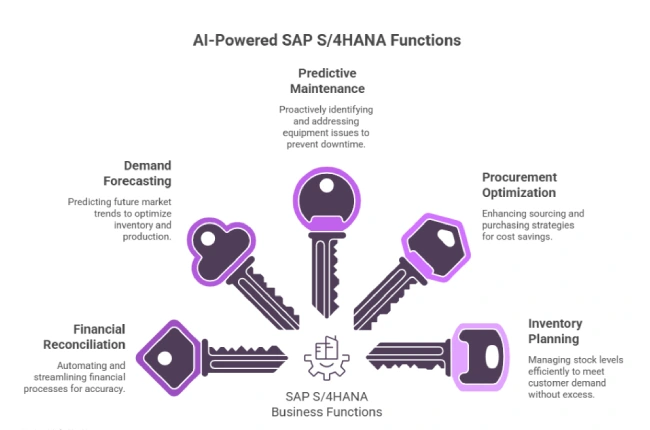
Collectively, these capabilities accelerate the shift from legacy ERP to an intelligent, agile, and future-ready enterprise platform.
SAP ECC to S/4HANA Conversion Strategies: Which Approach Is Right for Your Business?
Success of SAP S/4HANA migration depends on selection of a strategy that is based on organizational business objectives, SAP environment, process maturity, data strategy, and other factors.
There are three well-known strategies available to organizations that are considering moving to SAP S/4HANA. These include Brownfield Conversion, Greenfield Implementation, and Selective Data Transition.
-
Brownfield Conversion
A Brownfield conversion transforms an existing SAP ECC system into SAP S/4HANA while keeping much of the existing business process design, configuration, and historical data intact.
This tends to be the right fit for organizations that:
- Want to protect existing investments and business processes
- Have a relatively stable SAP landscape
- Need to keep business disruption to a minimum
- Prefer a structured, well-defined transition
- Want to modernize incrementally rather than all at once
Brownfield conversion can reduce the need for process redesign. Organizations still need to work through system readiness, custom code, data quality, integrations, and S/4HANA compatibility.
-
Greenfield Implementation
A Greenfield implementation builds a new SAP S/4HANA environment from the ground up, rather than converting the existing ECC system directly.
This approach tends to suit organizations that:
- Want to redesign business processes rather than carry them forward
- Are working with a highly customized or complex legacy environment
- Are consolidating multiple ERP systems into one
- Want to adopt SAP Best Practices as a starting point
- Are undertaking a broader business transformation, not just a system upgrade
Greenfield gives organizations far more freedom to simplify and build a clean core, but it comes at a cost: heavier business involvement, real process redesign, more intensive data migration planning, and a bigger organizational change management lift.
-
Selective Data Transition
Selective Data Transition sits between the two organizations selectively migrate the business data that matters most while redesigning or modernizing specific processes along the way.
This tends to work well for enterprises that:
- Are dealing with complex legacy landscapes
- Need to retain certain historical data but not all of it
- Want to redesign specific processes without a full rebuild
- Are pursuing a phased transformation
- Need more flexibility than a straight conversion allows
For organizations facing more complex transformation requirements, Selective Data Transition often strikes the right balance between continuity and modernization.
How to Choose the Right SAP S/4HANA Migration Approach
The optimal approach is shaped by several strategic considerations:
- Business transformation objectives
- SAP ECC system complexity
- Level of custom development
- Data quality and historical data requirements
- Integration landscape
- Desired implementation timeline
- Tolerance for business disruption
- Process standardization goals
- Cloud adoption strategy
- Budget and resource availability
A structured SAP assessment is often the fastest way to cut through these variables and land on the approach that actually fits an organization’s transformation goals.
Key Success Factors for SAP ECC to SAP S/4HANA Conversion
The effort that makes it possible for an SAP S/4HANA conversion to be successful lies largely in the preparatory work done prior to the actual technical process. The preparation and assessment process will include the following.
-
Step 1: Perform SAP Landscape and Readiness Assessment:
A detailed assessment of the current SAP landscape will help spot possible compatibility problems, outdated functionalities, dependencies, custom solutions, and potential risks for migrations.
It makes sense to use SAP Readiness Check as the starting point; this tool allows businesses to estimate the consequences of their move to SAP S/4HANA and determine what should be done beforehand.
-
Step 2: Enhance Data Quality:
Inadequate or outdated data does not only complicate the migration process but also negatively affect business processes that would be based on this data afterwards.
The company should:
- Cleanse master data
- Archive obsolete information
- Review data retention requirements
- Identify duplicate records
- Validate critical business data
Data quality enhancement should be seen as a critical part of the overall transformation process.
-
Step 3: Address Business Partner and CVI Requirements:
Organizations moving to SAP S/4HANA need to prepare for changes like Customer-Vendor Integration (CVI) and Business Partner adoption. Getting ahead of this early tends to save a lot of last-minute remediation pain.
-
Step 4: SAP Custom Code Remediation:
Early Custom ABAP development is one of the biggest variables in any SAP ECC to S/4HANA conversion.
Organizations should identify:
- Custom programs affected by S/4HANA changes
- Obsolete transactions and functionality
- Custom objects that need remediation
- Unused developments that can simply be retired
- Places where standard SAP capability can replace a customization altogether
Starting custom code remediation early can meaningfully cut technical debt and improve overall conversion readiness.
-
Step 5: Validate Interfaces and Integrations:
Most enterprise SAP environments connect to a wide range of third-party applications, data platforms, middleware, and external systems. Each of those integrations deserves a hard look at:
- Compatibility
- Data flow
- API or interface changes
- Performance
- Security
- Failure and recovery scenarios
-
Step 6: Establish a Comprehensive Testing Strategy:
Testing needs to run across the full transformation lifecycle:
- Unit testing
- Integration testing
- Regression testing
- User acceptance testing
- Performance testing
- Security testing
- End-to-end business process testing
Running multiple test cycles and mock conversions tends to surface issues well before they can affect production cutover.
-
Step 7: Develop a Detailed Cutover and Rollback Plan:
A well-built cutover plan spells out timelines, responsibilities, dependencies, validation steps, communication protocols, and contingency plans.
Mock cutovers are worth the time they help teams find bottlenecks and sharpen production readiness before it counts.
Common SAP S/4HANA Migration Challenges
SAP S/4HANA opens up real transformation opportunities, but the path there isn’t without friction.
Legacy Customizations
Heavily customized ECC environments often need extensive code analysis and remediation before conversion can even begin.
Poor Master Data Quality
Inconsistent, duplicate, or outdated data adds migration effort and can undermine business process reliability down the line.
Complex Integration Landscapes
Multiple interfaces and third-party systems create dependencies that need to be assessed and tested carefully, not assumed to just work.
Unsupported Add-Ons and Legacy Functionality
Existing add-ons or SAP functionality may simply not be compatible with the target S/4HANA environment.
Downtime Constraints
Organizations running highly transactional environments often have strict limits on how much production downtime they can absorb.
Change Management and User Adoption
SAP S/4HANA changes business processes, interfaces, roles, and workflows which makes effective change management essential, not optional, for real adoption.
Proactive planning, solid governance, and ongoing stakeholder engagement go a long way toward keeping these challenges from derailing the implementation timeline.
SAP S/4HANA Conversion Best Practices
A successful SAP S/4HANA transformation depends on getting technology, business processes, data, and people aligned.
Align SAP Transformation with Business Objectives
Treat the migration as a business transformation initiative, not simply an IT upgrade. Set measurable objectives around efficiency, process simplification, user productivity, cost optimization, analytics, and innovation.
Simplify Before Migrate
Don’t carry unnecessary complexity forward into the new environment. Take a hard look at existing processes and decide what can be eliminated, standardized, or replaced with standard SAP capability.
Start Custom Code Remediation
Identify and prioritize custom developments well ahead of the conversion phase it reduces technical risk and makes the whole project more predictable.
Prioritize Data Quality
Cleanse, classify, archive, and validate data before migration, so the new ERP environment starts on a reliable foundation.
Perform Multiple Mock Conversions
Mock conversions and cutover rehearsals are where technical issues get caught, timelines get validated, and production readiness gets tested.
Business Stakeholders
Business users need a seat at the table throughout assessment, design, testing, training, and deployment. Their involvement is what makes process validation and adoption work.
Establish Strong Governance
Clear roles, responsibilities, decision-making processes, escalation paths, and executive sponsorship to keep the transformation anchored to business priorities.
What Happens After SAP S/4HANA Go-Live?
After deployment, the focus should shift to:
- Optimizing business processes
- Expanding SAP Fiori adoption
- Leveraging embedded analytics
- Introducing intelligent automation
- Strengthening cybersecurity and compliance
- Exploring SAP Business Technology Platform (SAP BTP)
- Monitoring system performance
- Improving user adoption
- Identifying opportunities for continuous innovation
A well-thought-out post-go-live strategy is what takes an organization from simply operating SAP S/4HANA to actually realizing its full business value.
SAP ECC to SAP S/4HANA Conversion: A Strategic Transformation Opportunity
The transition from SAP ECC to SAP S/4HANA is an opportunity to rethink existing processes, reduce technical complexity, enhance data-driven decisions, and lay the foundation for innovation.
Regardless of whether an enterprise is going to use Brownfield migration, Greenfield implementation, or Selective Data Transition strategy, there are some aspects that need to be taken into account: proper planning, effective governance, business alignment, data preparation, custom code remediating, and thorough testing.
Companies which initiate the preparations early enough are likely to have better chances to identify the migration challenges, make appropriate strategic decisions, and stick to a more predictable path to SAP S/4HANA.
The objective is not merely to move away from SAP ECC. It is to create something simpler and more intelligent.
Planning Your SAP S/4HANA Journey?
Whether you are evaluating a Brownfield conversion, a Greenfield implementation, or a Selective Data Transition, choosing the right strategy can make the difference between a migration that adds risk and one that adds real business value.
Connect with Emergys to talk through your SAP transformation roadmap and explore practical strategies for a successful SAP S/4HANA migration.
Author:
Ashwin Mane
Technical Manager | Emergys
Specializes in SAP Basis, solution delivery, certified SME and supporting organizations to build reliable and future-ready SAP environments.
Frequently Asked Questions
-
What is Third-Party Risk Management migration?
It is the transition from manual or legacy TPRM processes to an automated, platform-driven risk management environment.
-
Why is TPRM migration important for financial institutions?
It enables continuous vendor risk visibility, stronger regulatory compliance, and effective third-party governance.
-
What are the five phases of a TPRM migration?
The five phases are Foundation, Systemization, Formalization, Connection, and Continuous Monitoring.
-
How should vendors be prioritized during TPRM migration?
Vendors should be prioritized based on criticality, business impact, data access, regulatory relevance, and substitutability.
-
What are the common pitfalls in TPRM migration?
Common pitfalls include migrating all vendors at once, unclear ownership, poor data migration, skipped CMDB integration, and weak change management.